
Working in Japan’s tech scene might sound intimidating, but I’m not into pie-in-the-sky fantasies—I’m putting in the work. Right now, I’m pouring my efforts into preparing for the JLPT N3 exam and getting a solid handle on Java. There’s no secret formula or magic shortcut, just a roadmap of specific steps I’m following to make the move. Curious about what that roadmap looks like? Let’s dig in.
The Path
N3 Certifications
Yes, you can land a job in Japan using only English, but the competition is steep. You need to be an exceptionally skilled engineer—or have the right connections. I’m not that person, so my strategy is to learn Japanese and tap into a larger pool of opportunities.
Why N3? It’s the midpoint between beginner and near-fluent. An N3 certification opens many doors (though not as many as N2), but given my limited timeline and budget, aiming for N3 is more realistic. The JLPT is held twice a year—in July and December. I’m targeting the July exam, which leaves me about 110 days to prepare. That’s already a pretty tight schedule.
I plan to use Bunpro, since it breaks lessons down by level (N5–N1). According to their resources, there are around 4,200 vocabulary words and 522 grammar points to cover from N5 to N3. That’s huge for just 110 days. Accounting for rest days (to avoid burnout), I’ll need to learn 45 vocab and 7 grammar points daily. And that’s on top of writing, listening, and speaking practice—crucial for actually cementing what I learn.
Mastery of Java
Java (specifically with spring) is still the most common programming language in Japan, followed by C, Python, PHP, and Javascript. Take a look at this picture taken from Tokhimo

Among the top 5, I’m already quite confident in my skill with PHP and Javascript. While for Java… I don’t even remember the last time I used it. So that’s why mastery of Java is being put as a priority for paving the way to Japan.
Marketing
One crucial step that often gets overlooked in a job hunt—especially one that crosses borders—is marketing yourself. Recruiters abroad likely won’t recognize the companies you’ve worked for, even if they’re giants in your home country. So how will they know you’re a top-tier candidate? They won’t—unless you show them. That’s why I started this blog: to document my learning process and build a visible track record of what I bring to the table. It’s part portfolio, part personal brand, and it helps bridge the gap between my experience and an employer’s first impression of who I am and what I can do.
The Method
So, the path is clear—now, how do I tackle these three big goals? I will start by conquering the JLPT N3 with a mix of structured study and immersion, then move on to mastering Java with hands-on practice and real projects, and finally, focusing on marketing myself so potential employers see exactly what I bring to the table. Let’s break down each step.
Spaced Repetition System (SRS)
I’m gonna rely on a spaced repetition system to lock new information into my long-term memory by reviewing it at gradually increasing intervals. For example, let’s say I learn the word 私 (わたし・watashi) today, meaning “I” or “me.” With SRS, I’ll see it again in a few hours, then tomorrow, then two days later, and so on. This method has helped countless people around the world learn new languages, and I’ve found it invaluable for building and retaining my own vocabulary.
Writing
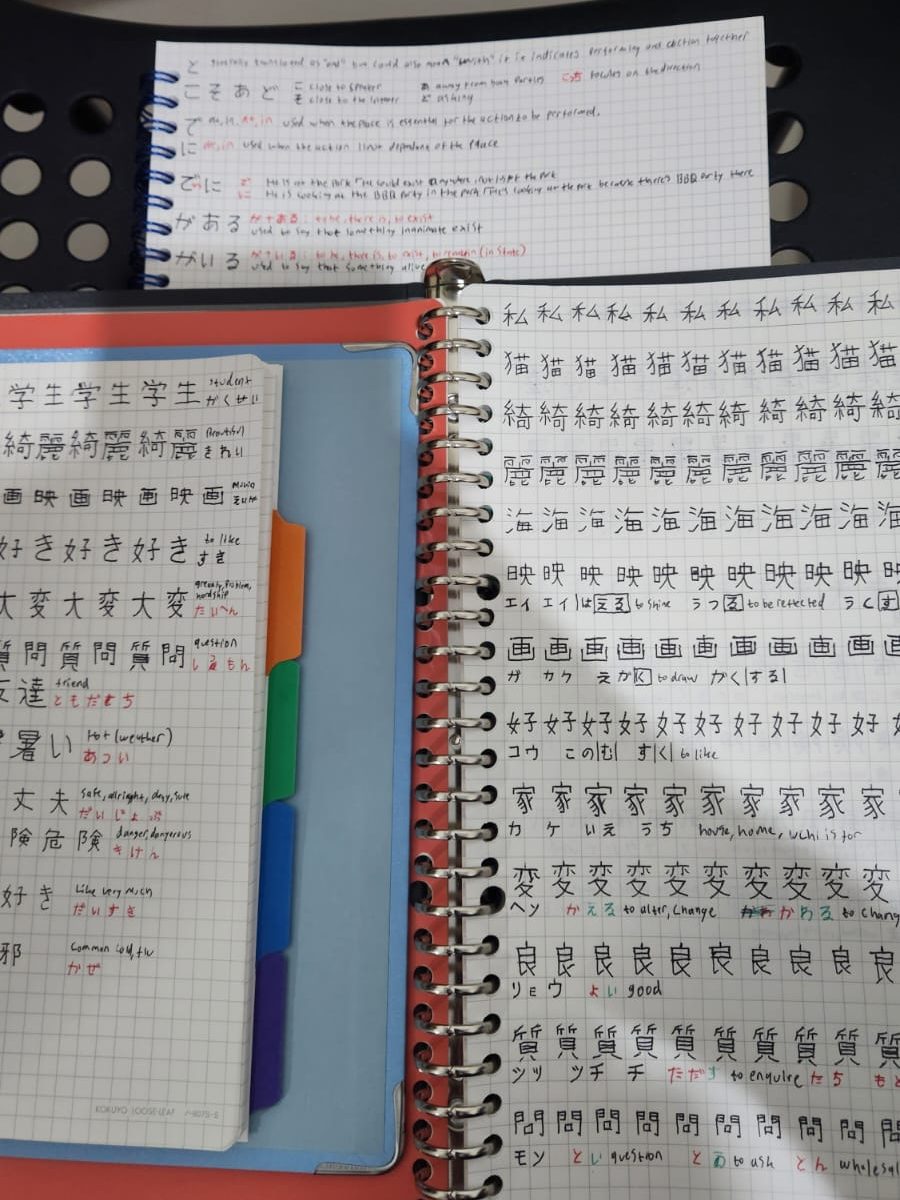
I’ve discovered that writing things down—by hand—is a powerful memory aid. This becomes doubly important when learning a new writing system. Japanese has nearly 3,000 kanji characters, and I know reading them passively won’t take me nearly far enough. Putting pen to paper (or stylus to tablet) forces me to focus on each stroke and meaning, helping cement new characters in my mind.
Immersion
I can memorize words and practice writing all day, but if I can’t listen or speak, it’s all for nothing. That’s where immersion comes in. The best way to put my studies into action is by surrounding myself with the language—watching Japanese shows, listening to podcasts, and tuning in to music where I can try to pick out the words and grammar I’ve learned. That part is relatively straightforward. Speaking is the real challenge, and I’ll explain how I plan to tackle that in the next section.
So, that wraps up my approach to learning Japanese. Now, let’s move on to how I’m tackling Java.
Reading Books
I’ll admit I’m a bit old-school when it comes to learning a new programming language. While many people gravitate toward video tutorials or online courses, I still reach for a good book. Maybe it’s nostalgia for my simpler college days, or maybe I just like having the freedom to listen to music while I read. Whatever the reason, I find the depth and pace of books help me really digest new concepts.
Solving Challenges
I handle new programming concepts much like I approach language learning: by applying what I’ve studied. That means diving into coding challenges online. It not only reinforces my newly acquired knowledge but also prepares me for technical interviews, where coding tests are a common hurdle. Solving challenges feels like hitting two targets with one arrow—skill-building and interview prep all in one.
Create a Project
Finally, a personal project brings it all together. I can learn to handle real coding hurdles, build features from scratch, and troubleshoot issues on my own. This hands-on experience is exactly what I can showcase in a portfolio or on GitHub, proving that I’m not just reading about Java—I’m actually using it.
Marketing Myself
Getting noticed by potential employers—especially those abroad—takes more than just sending out résumés. If a recruiter has never heard of the company I worked for, how will they know I’m a strong candidate? That’s where personal branding comes into play. By blogging about my progress, sharing insights on projects, and documenting my learning journey, I’m creating a tangible record of what I can do. It’s a straightforward way for recruiters to gauge my commitment, my skills, and my personality—all before we even have a conversation. I’m gonna have to learn about what time is best to post the link for each platform I’m gonna be using as well as the best format to engage the audience. This is a completely new realm for me but I’m excited and eager to tackle this one.
The Tools
The path is set and the method is decided, but there’s one more piece to the puzzle: the tools. Having the right resources can turn a well-planned route into tangible, day-to-day progress. Next, I’ll dive into the specific apps, platforms, and practices I’ll use to bring my plan to life.
Bunpro
As I already mentioned above, I’m gonna be using bunpro to learn Japanese. They don’t have a dedicated deck for Kanji but their deck for vocabulary would reflect what kanji are used in each level so that’s good enough. I have subscribed to their monthly plan, it’s about 5 USD/month which I think is far too cheap for the level of quality that they have. But hey cheaper is better for me as a customer.
Books
I’ve decided to use Head First Java (3rd Edition) as my go-to resource for learning Java. It’s quite a hefty read, so I’ll skip the sections covering concepts I already understand. What draws me to this book is its assumption that readers know absolutely nothing about programming, which means it breaks everything down in a fun, approachable way. That’s a big plus for me, because let’s face it—technical material can be pretty dry. When a book injects some humor and creativity, it keeps me engaged and makes the learning stick.
As for Japanese part, I have 3 notebooks, each for a different purposes. Kanji, vocab, and grammar.
LeetCode
LeetCode is a go-to platform for software engineers worldwide to sharpen their coding skills, and it’s pretty much the gold standard for interview prep. Many companies use LeetCode directly during their hiring process, so I’m planning to tackle the Top Interview 150 starting with the easy ones. Solving these challenges in Java will give me consistent practice and set me up nicely for any technical interviews down the road.
ChatGPT
I’ve covered reading, writing, and listening to immerse myself in Japanese, but I still need a reliable way to practice speaking. That’s where ChatGPT’s advanced voice mode (for pro users) comes in. My plan is to feed the AI any new grammar and vocabulary I pick up each day, then have actual conversations around those topics. I’m also integrating a spaced repetition element, so ChatGPT will occasionally quiz me on past material. It’s like having a language partner on call—perfect for reinforcing both my speaking and recall skills.
Timer
With so much on my plate, it’s easy to get lost in one task and completely sideline the others. That’s why I need a solid timer setup to track how much time I spend on each of my three focus areas. I found a handy Chrome extension that offers multiple stopwatches, letting me monitor each goal separately. This way, I can keep my workload balanced and give each task the attention it deserves.

I’ve laid out my plan, from conquering N3 to honing my Java skills and marketing myself to potential employers in Japan. The blueprint is there, the tools are ready, and now comes the real test—putting it all into action. Sure, I might have spent zero time on the technical side today, but it’s a reminder that juggling multiple goals takes constant recalibration. Still, I’m excited to push forward, learn from each challenge, and refine my approach as I go. Stay tuned—I’ll be sharing all the wins, hurdles, and lessons learned along the way.

 From Code to Kanji
Leave a reply to Albert Cancel reply